There’s a version of the Char Dham yatra that most people know — weeks of planning, long bus rides, unpredictable weather, and a body that’s already exhausted by the time it reaches the temple steps. I’ve seen that version up close. And then there’s the helicopter version, which is something else entirely.
This piece is not a sales pitch. It’s a ground level account of what the Char Dham yatra by helicopter actually looks like in 2026, from the moment you land at the helipad to the moment you finish your last darshan and head home.
If you’re trying to figure out whether this is the right way to do it, read on.
What the Char Dham Circuit Covers — And Why the Sequence Matters
Char Dham means four shrines. In Uttarakhand, those four are Yamunotri, Gangotri, Kedarnath, and Badrinath. The pilgrimage is traditionally completed in that exact order, moving from west to east, and there’s a reason for that sequence rooted in ritual and geography.
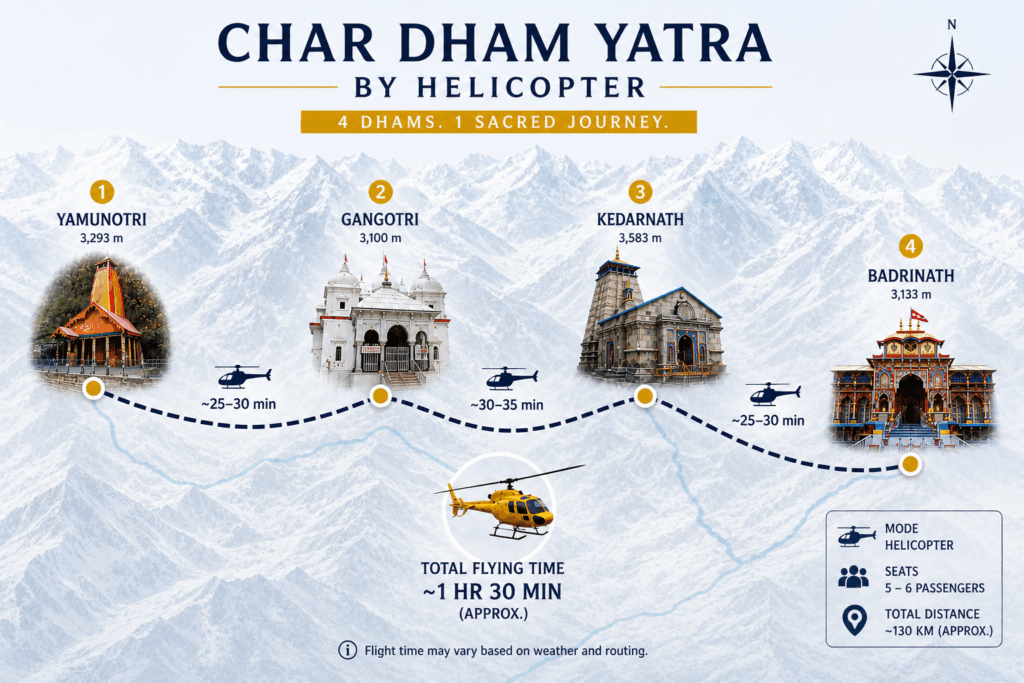
The 2026 season is already open. Yamunotri and Gangotri welcomed pilgrims from April 19, Kedarnath from April 22, and Badrinath from April 23. The season runs through October and into November, giving pilgrims a generous window before snow forces the temples to close again.
The best months to travel by helicopter are May to June and September to October. Avoid the height of monsoon where possible — weather cancellations are real, and a single disrupted slot can push your entire itinerary by a day.
What a Helicopter Yatra Day Feels Like
I want to paint this honestly, because the experience on the ground is nothing like what a brochure describes.
You start early. Departures from Sahastradhara Helipad in Dehradun begin in the morning. The briefing is quick and practical — weight check, luggage handover, safety instructions. You board in small groups. The rotors start.
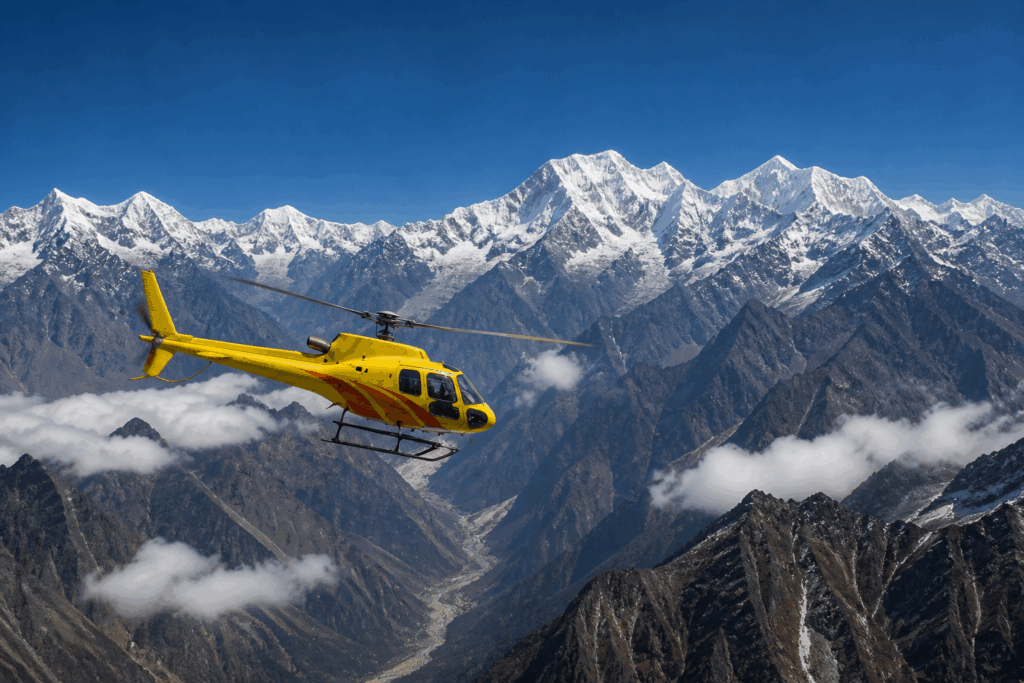
What comes next is difficult to describe without sounding like you’re overselling it. The Himalayas from above, at that altitude, at that hour, with the light still low — it doesn’t feel like travel. It feels like something else.
At each helipad, the ground team is already waiting. You’re walked to the staging area, given your darshan slot, and from there the pace is yours. Two hours at Kedarnath is enough for a calm, unhurried darshan if you’re organised. Rushing it doesn’t serve anyone.
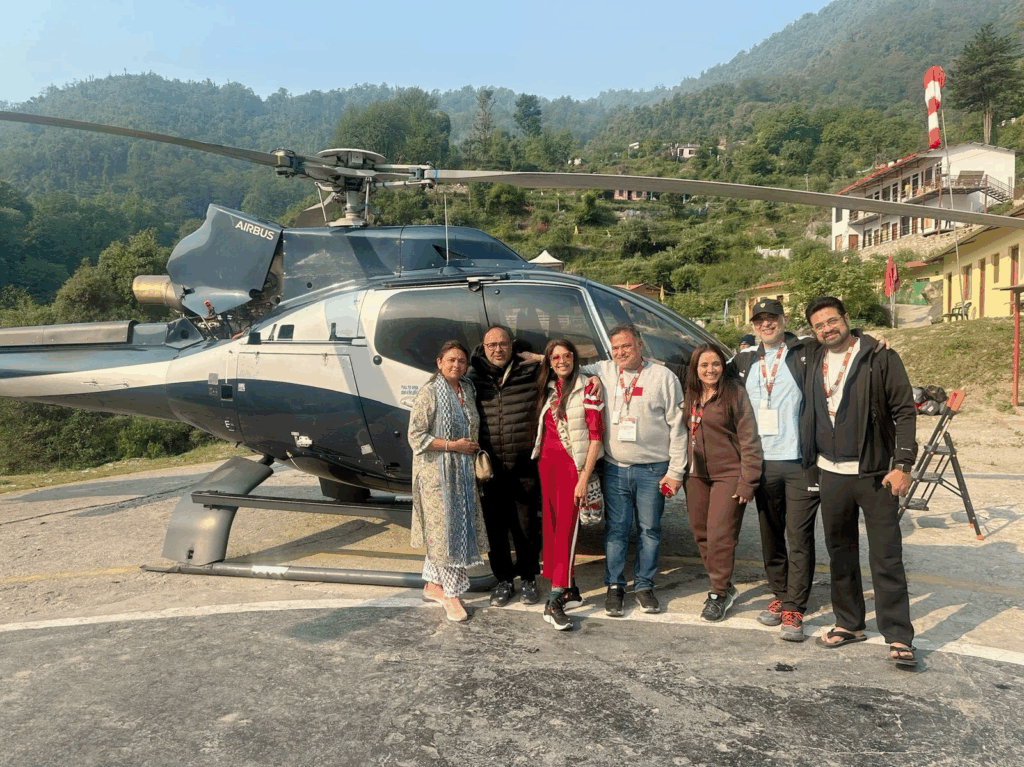
The full Char Dham circuit by helicopter with Accretion Aviation is structured across six days and five nights. That’s not a shortcut. That’s time you’re giving back to yourself — time that would otherwise be spent on switchback mountain roads, often at night, often in the cold.
Shrine by Shrine: The Helipads, the Transfers, and What to Expect on the Ground
Yamunotri — The helicopter lands at Kharsali Helipad. From there, the final stretch to the temple is covered by pony or palki service, which Accretion Aviation helps arrange. The walk and the wait are part of the experience here — Yamunotri rewards patience.
Gangotri — This one has a longer ground transfer. The helicopter lands at Harsil Helipad, and a car transfer is arranged to the temple. The drive through that valley is genuinely beautiful. Budget around three hours for this shrine including travel time.
Kedarnath — This is the one most pilgrims feel most strongly about. The helicopter brings you to a base helipad at Sersi, Phata, or Guptkashi, and from there a dedicated shuttle takes you up to the Kedarnath shrine. Overnight stays for this leg are arranged in Sersi, Phata, or Guptkashi — not at the temple itself, which sits at an altitude that doesn’t permit it. The overnight stay is worth it. The temple at dawn is a completely different experience.
Badrinath — The helipad here is the closest to the temple of the four. Ground transfer is minimal. This is where most pilgrims feel the yatra settle into something complete. Before flying back to Dehradun, Mana Village — the last village before the Indo China border — is worth the short visit if your energy allows.
The 2026 Rules You Actually Need to Know Before You Go
A few meaningful changes are in place across the circuit this year. Entry restrictions have been introduced at Kedarnath, Badrinath, and Gangotri. Phones and cameras are not permitted inside temple premises in 2026, in a move aimed at preserving the sanctity of the shrines. Yamunotri remains open to all visitors.
A medical fitness certificate is required for pilgrims above a certain age or those with existing health conditions such as heart disease, asthma, diabetes, or hypertension. Accretion Aviation’s team will guide you on exactly what’s needed at the time of booking — but carry that document with you throughout the journey.
All pilgrims must complete the mandatory Char Dham Yatra registration online before the journey begins and obtain a Voucher from Accretion Aviation. This is checked at every shrine along the route. Accretion Aviation’s team assists you with understanding the registration process as part of the pre tour briefing in Dehradun.
What to Pack When You Have 5 Kilograms to Work With
The luggage limit on a Char Dham helicopter package is 5 kg per person, carried in a soft duffle bag. No hard cases. This isn’t an arbitrary rule — it directly affects helicopter performance and safety at altitude.
Five kilograms is actually workable if you plan carefully. What you need: a valid government photo ID, your Yatra registration document, your medical fitness certificate if applicable, one change of warm clothes, a light waterproof layer, personal medication, and a power bank. That covers you for the full circuit.
What you do not need: anything in a hard suitcase, duplicate items, or gear you’re carrying “just in case.” The helicopter is a pilgrimage vehicle. Pack like you mean it.
One practical note — temperatures at altitude vary wildly between morning and midday. Layering is more useful than packing heavy.
How to Choose a Helicopter Operator — The Questions That Actually Matter
Not all helicopter operators running Char Dham circuits are the same, and the difference matters more at altitude than almost anywhere else.
First, confirm DGCA certification. Every helicopter Accretion Aviation operates with is flown by DGCA licensed pilots and maintained to DGCA airworthiness standards. This is non negotiable and should be the first thing you verify with any operator.
Second, ask about the aircraft being used. For Himalayan pilgrimage routes, the Bell 407 or similar are the most frequently deployed aircraft on account of its high altitude performance. If an operator cannot tell you what aircraft they’re flying, that’s worth noting.
Third, understand the weather contingency plan. What happens if your Kedarnath slot is cancelled due to cloud cover? Is there a backup slot the same day? An overnight arrangement? Clarity here separates professional operators from those who are simply filling seats.
Fourth, ask whether VIP darshan is actually included or just listed. At Accretion Aviation, VIP darshan at all four temples is part of the package — which means less time in queues and more time where it matters.
If you want to understand what a properly structured Char Dham helicopter package looks like, the full itinerary is available at Chardham yatra by helicopter package.
Frequently Asked Questions
How many days does the Char Dham yatra by helicopter take?
Accretion Aviation’s Char Dham package is structured across six days and five nights, starting and ending in Dehradun. This gives you a full, unhurried visit at each shrine with comfortable stays in between.
What is the best time to book?
As early as possible. The May to June window fills quickly. September to October is slightly more open but still books out fast in a busy season.
Is helicopter yatra safe for elderly or unwell pilgrims?
Yes, and in many ways it is the preferred option. Accretion Aviation is set up specifically for senior citizen travel — assistance is provided from Dehradun airport pickup through to temple visits and return. A medical fitness certificate may be required depending on age and health history.
What is the difference between Do Dham and Char Dham by helicopter?
Do Dham covers Kedarnath and Badrinath and can be completed in around four days. Char Dham covers all four shrines and takes six days. The two packages have different luggage allowances as well — check with the team at the time of booking.
Can I customise the itinerary?
Speak to the Accretion Aviation team directly about this. The standard package follows a fixed itinerary, but the team can discuss options based on your travel dates and preferences.
What documents do I need to carry?
Valid government photo ID, your Char Dham Yatra registration document and Yatra ID, medical fitness certificate if applicable, and your booking confirmation from Accretion Aviation.
Before You Go
The Char Dham yatra by helicopter is not the easy version of the pilgrimage. Darshan is still darshan — the weight of those four shrines doesn’t reduce because you arrived by air. What changes is the journey to get there. You arrive at each temple present, unhurried, and physically whole. For many pilgrims, that changes the quality of the experience entirely.
If you’re planning the 2026 season, the window is open and moving fast. Book early, pack light, and travel with a team that knows the mountain.
Plan your Char Dham Yatra by helicopter with Accretion Aviation